Losing more than one tooth can make everyday tasks like eating feel frustrating and uncomfortable. Many people find themselves avoiding certain foods, chewing on one side of the mouth, or simply tolerating a reduced quality of life. If this sounds familiar, you are not alone.
Multiple teeth implants in West Ryde offer a structured way to address these challenges. Unlike removable dentures, dental implants are anchored into the jawbone, providing a stable foundation that closely mimics the way natural teeth function.
This article explores how multiple implants may help restore chewing ability, what the process typically involves, and what to consider before speaking with a dental professional. Understanding this treatment option can help you make a more informed decision about your oral health.
Why Missing Teeth Affect Your Ability to Chew
Teeth work as a coordinated system. When one or more are missing, the remaining teeth take on extra pressure during chewing. Over time, this uneven distribution of force may lead to wear on surrounding teeth and discomfort in the jaw.
The jawbone also plays an important role. Natural tooth roots stimulate the bone through everyday biting and chewing. When a tooth is lost, that stimulation stops, and the bone in that area may gradually begin to reduce in volume, a process known as bone resorption.
For those exploring multiple teeth implants in West Ryde, understanding this bone loss process is an important first step. Implants are placed directly into the jawbone, which may help maintain bone stimulation over time.
Left unaddressed, missing teeth can affect how well your remaining teeth fit together, gradually change your facial structure, and make it harder to enjoy a wide range of foods.
What Are Multiple Teeth Implants?
Dental implants are small titanium posts that are placed into the jawbone by a dental professional. They act as artificial tooth roots.
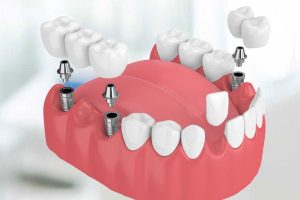
Once the implant integrates with the surrounding bone a process called osseointegration a crown, bridge, or other restoration is attached on top. When more than one tooth is missing, several treatment configurations may be considered:
Individual Implants for Each Missing Tooth
Each gap is filled with a separate implant and crown. This approach treats each missing tooth independently and does not require support from adjacent teeth.
Implant-Supported Bridges
Two or more implants can support a bridge that spans across a gap where multiple consecutive teeth are missing. This may be suitable when placing an individual implant for every missing position is not possible or practical.
Implant-Retained Dentures
For patients missing most or all teeth in one arch, implants can be used to anchor a full or partial denture. This provides far greater stability than a conventional removable denture and may improve chewing efficiency considerably.
Each approach has different requirements, and a treatment plan is typically tailored to the individual based on bone density, the number and location of missing teeth, and overall oral health.
How Implants May Help Restore Chewing Function
The key to how implants support chewing lies in their integration with the jawbone. Because implants are embedded in the bone rather than resting on the gum surface, they are able to transfer chewing forces more directly similar to how a natural tooth root behaves.
This may offer several functional advantages:
More even force distribution. With implants filling the gaps, chewing pressure is distributed across a greater number of contact points, reducing the overload on remaining natural teeth.
Greater food variety. Many people with missing teeth avoid harder foods such as raw vegetables, nuts, or lean meats. Once implants are restored and integrated, patients may find it easier to manage a wider range of foods, which can also support better nutrition.
Improved jaw stability. Implants help maintain the position of surrounding teeth, which may reduce the risk of adjacent teeth drifting into the gaps, a common occurrence when missing teeth are not replaced.
Potential reduction in jaw strain. When biting and chewing are more balanced, the muscles and joints involved in jaw movement may experience less unnecessary strain over time.
It is important to understand that individual outcomes vary. A thorough assessment with a dental professional is needed to determine which treatment approach may be suitable and what results are realistically achievable for your specific situation.
The Placement Process: What to Generally Expect
While every treatment plan is personalised, the general stages of multiple implant placement typically include the following:
Initial Assessment and Planning
Your dentist will review your dental and medical history, assess bone volume through X-rays or 3D imaging, and evaluate the health of your gums and remaining teeth. This stage helps determine whether implants are a suitable option and, if so, which configuration may be most appropriate.
Implant Placement
The implant posts are placed into the jawbone under local anaesthesia. Depending on the number of implants and other factors, multiple appointments may be needed, or all placements may occur in a single session.
Healing and Osseointegration
After placement, there is a healing period during which the implant gradually bonds with the surrounding bone. This process typically takes several months and varies from person to person.
Placement of Restorations
Once the implants have integrated successfully, the crowns, bridge, or other restoration components are attached. Your dentists in West Ryde will check the fit, bite alignment, and appearance before finalising the restorations.
Caring for Multiple Dental Implants
Caring for implants involves many of the same habits used to maintain natural teeth. Regular brushing twice daily and cleaning between teeth using floss, interdental brushes, or a water flosser helps keep the surrounding gum tissue healthy and reduces the risk of peri-implant disease.
Routine dental check-ups are also important. Your dental professional can monitor the condition of the implants, the surrounding bone, and the restorations to identify any concerns early.
Avoiding habits such as using teeth to open packaging or chewing on hard, non-food objects may also help protect both implants and natural teeth from unnecessary stress.
Frequently Asked Questions
Can implants really handle the same chewing forces as natural teeth?
Dental implants are designed to withstand normal chewing forces. However, the level of function achievable depends on the number of implants placed, the quality and volume of the surrounding bone, and how well the bite is balanced. Your dentist will assess these factors during treatment planning to help set realistic expectations.
How long does it take to restore full chewing function after implant placement?
The timeline varies for each person. After implant placement, the osseointegration phase typically takes three to six months, sometimes longer. Temporary restorations may be used during this period. Once the final crowns or bridge is fitted and your bite is confirmed to be balanced, most patients are able to gradually resume normal eating habits.
Are multiple implants suitable for everyone with missing teeth?
Not everyone is an immediate candidate for implants. Sufficient bone density is required to support the implant posts. Those with certain medical conditions, active gum disease, or significant bone loss may need additional treatment such as bone grafting or gum therapy before dental implants can be considered. A comprehensive assessment is the best way to determine whether this option suits your individual circumstances.
What happens if I delay replacing multiple missing teeth?
When gaps are left untreated for an extended period, adjacent teeth may shift, bone resorption may progress, and the complexity of future treatment may increase. Acting early does not guarantee any particular outcome, but addressing missing teeth sooner rather than later is generally considered beneficial for maintaining surrounding tooth and bone health.
Conclusion
Multiple missing teeth can meaningfully affect how well you chew, the range of foods you feel comfortable eating, and your overall quality of life. Dental implants offer a structured approach to restoring function by providing stable, bone-anchored support that works in a way that closely resembles natural tooth roots.
Whether individual implants, an implant-supported bridge, or implant-retained dentures may be appropriate for you will depend on a thorough assessment of your specific dental needs.
If you have been considering your options, the team at Dental and Facial Clinic West Ryde welcomes you to book a consultation to discuss what may be suitable for your situation and long-term oral health goals.
References:
- American Academy of Implant Dentistry. (n.d.). What are dental implants? Available at: https://aaid-implant.org/faqs/what-are-dental-implants/
- Mayo Clinic. (n.d.). Dental implants. Available at: https://www.mayoclinic.org/tests-procedures/dental-implant-surgery/about/pac-20384622
- National Institute of Dental and Craniofacial Research. (n.d.). Dental implants. Available at: https://www.nidcr.nih.gov/
- U.S. Food and Drug Administration. (2021). Dental implants: What you should know. Available at: https://www.fda.gov/medical-devices/dental-devices/dental-implants-what-you-should-know