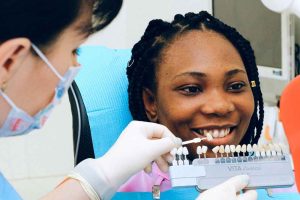
If you’ve been told your teeth are crowded or your bite is uneven, you may be wondering whether you need to see a specialist, or whether a dentist in West Ryde can help with orthodontic treatment.
It’s a common question, and the answer depends on the complexity of your case and the training of the dentist you see.
This guide explains what general dentists can and can’t do when it comes to straightening teeth, so you know what to expect before booking a consultation.
At a Glance
- Many general dentists complete additional postgraduate training in orthodontics and can offer treatments such as clear aligners and braces.
- More complex bite or jaw alignment issues are often referred to a specialist orthodontist.
- Your dentist can assess your teeth and discuss which options may be suitable for your situation.
- Orthodontic treatment timelines vary widely depending on the individual case.
- A consultation is a helpful way to understand your specific treatment pathway.
What Is Orthodontic Treatment?
Orthodontic treatment is dental care focused on correcting the position of teeth and, sometimes, the alignment of the jaws.
It typically uses braces or clear aligners to gradually move teeth into a more even position, addressing crowding, gaps, overbites, underbites, or teeth that have shifted over time.
Beyond appearance, well-aligned teeth can be easier to clean. This is one reason a dentist in West Ryde will often discuss orthodontic options as part of a broader oral health conversation, not just appearance.
Treatment length depends on the individual’s dental structure, which is why an assessment is an important first step.
Can a General Dentist Provide Orthodontic Treatment?
Yes, a general dentist can perform certain types of orthodontic treatment, provided they have undertaken the relevant postgraduate training and hold the appropriate qualifications to do so.
In Australia, dentists are permitted to provide orthodontic care within the scope of their training and experience, and many general dentists complete additional courses in orthodontics after their initial dental degree.
This means that for many patients, treatments like clear aligners or standard braces can be carried out by their regular dentist rather than requiring a separate specialist appointment. The suitability of this pathway depends on the complexity of the case, which is assessed during a consultation.
What Orthodontic Options Might a General Dentist Offer?
General dentists with orthodontic training commonly offer clear aligners, ceramic braces, and metal braces, depending on the patient’s needs and preferences. Each option has its own considerations around appearance, care requirements, and typical treatment duration.
- Clear aligners are removable, custom-made trays that gradually shift teeth. Many patients choose this option for its discreet appearance.
- Ceramic braces use tooth-coloured brackets that are less visible than traditional metal braces while working in a similar way.
- Metal braces are a well-established option often used for a broad range of alignment concerns, including in children and teenagers.
Your dentist can talk you through which of these options may be appropriate after examining your teeth and discussing your goals.
When Might a General Dentist Refer You to a Specialist Orthodontist?
A general dentist may refer a patient to a specialist orthodontist when the case involves complex jaw alignment issues, significant bite discrepancies, or treatment needs that fall outside their training and scope of practice.
Specialist orthodontists complete several additional years of training focused specifically on tooth and jaw movement.
Referral isn’t a reflection of anything being wrong with your case, it simply means your dentist wants to make sure you receive care from the provider best positioned to manage the specific complexity involved.
Your general dentist can continue to support your broader oral health throughout any specialist treatment, including regular check-ups and cleans.
What to Expect at Your First Orthodontic Consultation
A first orthodontic consultation typically involves an examination of your teeth, bite, and jaw alignment, sometimes supported by x-rays or digital scans. This helps your dentist understand the underlying structure before recommending an approach.
During this appointment, you can expect your dentist to:
- Review your dental and medical history.
- Examine your teeth, gums, and bite.
- Take any necessary images or scans.
- Discuss possible treatment options and what each may involve.
- Answer your questions about timelines, care, and next steps.
This is also a good opportunity to raise any concerns about comfort, appearance, or how treatment might fit into your daily routine.
Choosing the Right Provider for Orthodontic Treatment in West Ryde
Whether you start with a general dentist or go straight to a specialist orthodontist often comes down to the complexity of your case. For straightforward alignment concerns, a general dentist with orthodontic training may be a convenient option.
For more complex cases, your dentist will refer you to a specialist orthodontist who can manage that complexity. Either way, a thorough consultation and assessment is a sensible first step, since every patient’s teeth and jaw structure are different.
Frequently Asked Questions
Can any dentist do orthodontic treatment?
Not every dentist offers orthodontic treatment. It depends on whether they have completed additional training in this area and whether the specific case falls within their scope of practice. Some general dentists offer treatments like clear aligners and braces, while more complex cases are usually referred to a specialist orthodontist.
How long does orthodontic treatment usually take?
Treatment length varies significantly depending on the individual case, the type of appliance used, and the degree of correction needed. Your dentist can give you a general estimate after assessing your teeth, though timelines can change as treatment progresses.
Is orthodontic treatment only for teenagers?
No, orthodontic treatment is available to patients of many age groups, including adults. The suitability of treatment depends more on the condition of the teeth, gums, and jaw than on age alone.
What’s the difference between a general dentist and an orthodontist?
A general dentist provides broad oral health care and may offer orthodontic treatments if they have completed relevant additional training. A specialist orthodontist has undertaken several extra years of focused training specifically in tooth and jaw alignment and typically manages more complex cases.
Conclusion
Whether a general dentist can perform your orthodontic treatment depends on their training and the complexity of your case.
Many general dentists are equipped to offer options like clear aligners and braces for straightforward alignment concerns, while more complex situations may be referred to a specialist orthodontist.
A proper consultation and assessment is a helpful way to understand your options. The team at Dental and Facial Clinic West Ryde can help assess your teeth and talk you through the options that may suit your situation.
References:
-
- Dental Board of Australia. (2019). Scope of practice registration standard. Available at: https://www.dentalboard.gov.au/Registration-Standards/Scope-of-practice-registration-standard.aspx/
- Australian Health Practitioner Regulation Agency (Ahpra). (n.d.). Dental Board of Australia. Available at: https://www.dentalboard.gov.au/
- Dental Board of Australia. (n.d.). Specialist registration. Available at: https://www.dentalboard.gov.au/Registration/Specialist-Registration.aspx
- Dental Board of Australia. (n.d.). FAQ: Specialist registration. Available at: https://www.dentalboard.gov.au/Registration/Specialist-Registration/Specialist-registration-FAQ.aspx