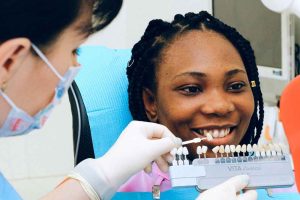
Composite veneers work well for some cosmetic concerns, but not all of them. Before you book a consultation, it helps to understand what they can and can’t do, so you and your dentist can talk through what’s realistic for your teeth.
People often assume composite and porcelain veneers are interchangeable, but they’re not. Your dentist chooses between the two based on what you want to change, the condition of your teeth, and how your bite works. Composite is shaped directly onto the tooth, while porcelain is made in a lab and bonded on later.
This guide explains when composite veneers may be a good fit, when another treatment might suit you better, and what to expect at a consultation. The information here follows Australian Dental Association and healthdirect guidance, current as of 2026.
Choosing between the two isn’t only about upfront cost. It also affects how much of your natural tooth is altered, how easily the result can be repaired later, and how the veneer is likely to look and perform over time. Understanding these differences before your appointment means you can ask more specific questions and compare your dentist’s recommendation against what you’re actually hoping to achieve.
Treatment outcomes vary from person to person, and only an in-person assessment can determine what’s right for your teeth.
At a Glance
- Composite veneers consist of tooth-coloured resin applied directly to the tooth surface and shaped chairside by the practitioner.
- They may be considered for small chips, worn edges, minor gaps, subtle shape variations, or isolated discolouration.
- Mild surface staining may be managed with composite resin, though professional tooth whitening is typically evaluated first for widespread discolouration.
- They do not resolve underlying bite misalignments or moderate to severe crowding, which require orthodontic management.
- Active dental conditions, such as tooth decay or periodontal disease, must be managed prior to elective cosmetic treatment.
What Are Composite Veneers?
A composite veneer is a thin layer of tooth-coloured composite resin bonded directly to the front surface of a tooth. According to the Australian Dental Association, the material used is similar to the dental resin used for tooth-coloured restorations, sculpted directly onto the enamel in the dental chair.
Because fabrication occurs chairside rather than in an external dental laboratory, treatment can often be completed in a single clinical visit, though additional review appointments may be necessary when treating multiple teeth.
This chairside application allows the practitioner to build up, contour, and polish the resin in real time. Consequently, composite resin is particularly well matched for localized, conservative adjustments.
Which Cosmetic Concerns May Composite Veneers Address?
Composite veneers are generally considered for localized aesthetic concerns on healthy front teeth: minor enamel chips, worn or uneven edges, small interdental gaps, mild shape irregularities, and individual discoloured teeth.
Your dentist may evaluate composite veneers for concerns such as:
- Gaps between otherwise aligned front teeth
- Discoloured, chipped, or slightly worn teeth
- Subtle spatial misalignments
- Teeth with irregular morphology, such as peg lateral incisors
Composite resin offers a conservative treatment path, as it can often be applied with minimal enamel preparation. Additionally, the material can be adjusted or polished in the chair if minor wear occurs over time. When exploring options at a dentist in West Ryde, these factors are typically reviewed during your initial assessment.
Chips, Worn Edges, and Shape Irregularities
Minor chips and localized edge wear on front teeth are common concerns where composite resin may be applied. The practitioner builds up the missing structure in incremental layers, matching the shade and contours of adjacent teeth.
When addressing worn edges, the underlying cause of the wear must be evaluated. If enamel loss is linked to nocturnal clenching or grinding (bruxism), applying resin without managing bite forces increases the risk of fracture. A custom dental night guard may be discussed as part of ongoing dental care in west ryde to help protect natural teeth and restorations alike.
Teeth that are naturally undersized or narrow can also be built up with composite resin to improve symmetry. The degree of reshaping achievable depends on available bite clearance and surrounding tissue architecture.
Interdental Gaps, Minor Misalignment, and Discolouration
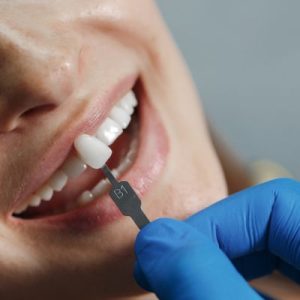
Composite resin can close minor interdental gaps and mask minor alignment variations by adding material to the outer tooth surface. However, because this process adds physical volume, there are anatomical limits to how much width can be added without creating an overcontoured appearance.
- Interdental Gaps: Small spaces between aligned teeth are often manageable with direct composite resin. Larger gaps may require orthodontic closure, either independently or prior to restorative work, to maintain natural proportions.
- Discolouration: If a single tooth is discoloured due to localized trauma or previous root canal therapy, a composite veneer can help mask the shade mismatch. For generalized discolouration across the smile, professional teeth whitening is typically evaluated first. Because composite resin is slightly porous, it may absorb surface stains over time from dark foods, beverages, or smoking.
When Are Composite Veneers Not Indicated?
Composite veneers are not indicated when active oral disease is present, nor do they replace primary orthodontic or structural therapies. Indications where alternative treatments are required include:
- Active Decay or Periodontal Disease: Elective cosmetic procedures do not treat disease. The ADA highlights that veneered teeth remain susceptible to decay along exposed margins. All active health concerns must be resolved prior to placing cosmetic restorations.
- Significant Crowding or Bite Issues: Composite resin cannot correct structural misalignment. Attempting to mask moderate crowding with resin can lead to bulky restorations that trap plaque and compromise gum health. Clear aligners or orthodontic options move teeth into proper position directly.
- Extensive Structural Damage: If a tooth has lost significant structure due to trauma, deep decay, or large historical fillings, a direct veneer may not provide sufficient strength. In these cases, a full-coverage crown and bridge restoration may be recommended to provide structural support.
Comparing Composite and Porcelain Restorations
Selecting between direct composite resin and laboratory-crafted porcelain depends on clinical findings, aesthetic goals, bite dynamics, and personal preferences.
| Factor | Composite Veneers | Porcelain Veneers |
| Fabrication | Sculpted chairside in a single visit | Crafted in a dental lab over multiple visits |
| Enamel Reduction | Often minimal | Light surface reshaping usually required |
| Stain Resistance | Moderate (may absorb stains over time) | High (glazed ceramic resists surface staining) |
| Maintainability | Can be polished or repaired chairside | Fractures generally require replacement |
During a consultation for composite veneers in west ryde, your dentist will perform a comprehensive evaluation of your teeth, gums, and bite, providing a detailed treatment plan that outlines both benefits and potential limitations.
Frequently Asked Questions
What cosmetic concerns can composite veneers address?
Composite veneers may be considered for small chips, worn or uneven edges, narrow gaps between otherwise straight front teeth, slightly irregular tooth shapes, and individual discoloured teeth. Suitability depends on an in-person clinical examination of your teeth and bite.
Can composite veneers correct crooked teeth?
Composite veneers can camouflage minor spatial irregularities, but they add material to the tooth surface rather than moving teeth. Moderate to severe crowding or rotation requires orthodontic evaluation, such as clear aligners or traditional braces.
Are composite veneers suitable for discoloured teeth?
Suitability depends on the nature of the discoloration. A composite veneer can mask an isolated dark tooth. If multiple teeth are uniformly discoloured, professional tooth whitening is often evaluated first. Composite resin can also pick up surface stains over time.
Can I get composite veneers if I grind my teeth?
Teeth grinding (bruxism) must be evaluated and managed before or alongside cosmetic treatment, as bite forces can chip or wear composite resin. A custom night guard may be recommended to help protect the restorations.
Do composite veneers involve natural tooth preparation?
Composite veneers often involve minimal tooth reduction, making them a conservative restorative option. However, slight surface preparation may still be required depending on the alignment and shade changes needed.
You can read more about composite veneers and how they compare to porcelain to understand which ceramic or resin option may suit you.
Conclusion
Composite veneers offer a direct restorative option for localized cosmetic concerns on healthy front teeth, such as small chips, minor edge wear, narrow gaps, or single-tooth discolouration. They are not designed to resolve widespread discolouration, nor are they a substitute for orthodontic alignment or structural crowns. Active dental decay, gum disease, and unmanaged teeth grinding must be addressed before cosmetic treatment can begin.
Dental composite resins are composed of synthetic polymers and microscopic glass filler particles that bond securely to prepared enamel. Their primary advantages include repairability, single-visit placement, and conservative enamel preservation.
If you are considering whether composite resin is appropriate for your smile, an in-person assessment is essential. The clinical team at Dental And Facial Clinic in West Ryde can examine your oral health, discuss your goals, and outline a clear treatment plan.
References:
- Australian Dental Association (ADA Australia) – Crowns, Bridges and Veneers confirms that teeth with crowns, bridges, or veneers can still be damaged by tooth decay, and that these restorations can chip, fracture, or need replacement over time. https://teeth.org.au/crowns-bridges-and-veneers
- healthdirect Australia – Veneers Australian government health information covering what veneers are, how they’re placed, and general care considerations. https://www.healthdirect.gov.au/veneers
- MouthHealthy (American Dental Association) – Veneers Patient-education overview of veneer types, the placement process, and general maintenance. https://www.mouthhealthy.org/all-topics-a-z/veneers
- Oral Health Foundation – Veneers Patient information covering veneer materials, the fitting process, and aftercare. https://www.dentalhealth.org/veneers